

Yao提出的三支决策(three-way decision, 3WD) 是三元思维哲学、三元解决问题和三元计算机制的理论[1⇓-3]。通过对不同的三元组赋予具体的解释和含义, 建立一个简单易懂、易于记忆和实用的理论、模型或方法。例如, 将三元组解释为三个层次、三角形、三脚架、三段线和三个元素组成的集合等[4-5], 构建不同的3WD 模型。这种三元思维与三元方法是3WD 理论的基本理念,从三个元素、三个侧面或三个视角来考虑、表示和分析问题。3WD具有非常强的普适性和应用性,为求解复杂问题提供了一种有效的策略及方法。最近,索郎王青等[6]从三元思维与三元方法的视角综述了3WD 的理论、模型及应用。为了研究3WD 在数据科学中的应用, Yao 从传播学、信息科学和管理科学、认知科学和计算机科学中抽象出了Symbols-Meaning-Value (SMV)空间[7]。SMV空间有助于人们描述、理解和构建“感知什么”和“如何感知”“知道什么”和“如何知道”以及“做什么”和“如何做”。SMV 空间凭借其实用性、灵活性及简单性,适用于不同的领域,并为许多领域提供了三层思维。
三元思维反映了人类认知的普遍习惯, 是人类认识、理解和解决问题时常用的思考方法。然而, 在面临复杂和多元的问题时, 单个三元思维的思考方式有时可能显得不够全面和深入。因此, 本文基于三支决策的思想, 给出了双三元思维的概念。双三元思维是一种运用两次三元思维的方法或模式。从多个不同的角度或维度来考虑和分析问题、事物或概念等。这种思维方式有助于人类更全面地理解和解决复杂的问题, 以便更好地应对问题的多样性和多变性。双三元思维的概念激发了我们对两个三元组的研究。将两个不同的三元结构相结合,给出了3 × 3 方法与结构,从九个不同的层面或视角对问题进行分析、推理和判断。这种方法能够更好地把握问题的本质, 避免出现过于片面或偏颇的看法, 从而制定出更全面、更有效的解决方案。此外,使用不同的三元结构,可以构建多种3×3方法与结构。例如,融合三级层次和三角形方法, 得到了两种不同的3 × 3 方法:一是在三级层次方法的基础上, 每一层以三角形方法思考、分析和解决三个相关问题, 称为3 层× 3 角形方法;二是在三角形方法的基础上, 每个顶点以三级层次方法分析、理解和解决三个相关问题, 称为3 角形× 3 层方法。这些3 × 3 方法与结构不仅体现了双三元思维, 而且提供了具体的结构框架。这有助于我们更清晰地看到问题的全貌, 更有效地制定策略及更明智地做出决策。
以可解释人工智能(explainable artificial intelligence, XAI) 为例, 探讨双三元思维与3 × 3 方法在实际应用中的实用性、简单性及适用性。XAI 旨在让人类理解人工智能(artificial intelligence, AI) 系统做出的决策和推导过程, 从而消除AI 系统的黑匣子与不透明性, 建立用户对其的信任。最新的XAI 研究趋势表明, 必须有效地解释机器的内部流程和决策, 以便获得用户的理解、信任和认可[8⇓-10]。不同学者对XAI的定义有所不同,例如,Gunning等[9]认为XAI 是通过提供解释, 使得人类更容易理解AI系统的行为。Das等[10]指出XAI可以衡量人类对AI系统决策背后原因的理解程度。尽管XAI的定义难以统一, 但其核心目标始终是帮助人类理解、信任和接受AI 系统的决策。
现有的XAI 模型主要侧重于解释智能系统的工作流程和结果。关于解释的构建过程、结构、有效性和可理解性等诸多问题并没有得到应有的关注。从认知角度看, 有效的解释应当简单易懂。亦即,一个有结构的解释应当易于表示、易于沟通和易于理解。其中, 有结构的解释是指一种具有明确的组织结构、逻辑、步骤或框架的解释。这种解释是有条不紊的, 遵循一种逻辑顺序或框架。它使得解释内容更清晰、有条理、易于理解和传达。出于这种动机, Yao[11]将SMV 空间应用于XAI,提出了一种解释的3×3结构框架。这种解释框架为用户提供了构建解释的新方法、新视角及新思维,但并没有给出进一步阐述。本文基于双三元思维与3×3方法对解释的3 × 3 结构框架进行扩展并提出新的模型。借助SMV 空间的概念为3 × 3 方法的九个元素赋予具体的语义, 构建了基于SMV 空间的3 × 3 解释。从数据-知识-决策三个不同的层次分析与解释智能系统的数据、假设、工作原理及结果,使得所得到的解释便于用户交流、理解和接受。最后,将基于SMV空间的3×3解释方法和结构用于解释智能推荐系统。
1 3×3方法与结构
首先,简要回顾3WD 理论和三元思维的相关概念。然后,遵循3WD 的原则, 给出双三元思维的概念。通过双三元思维结合两个三元结构, 提出3×3方法和结构的概念,为求解复杂问题提供新的视角和方法。最后, 提出3 层× 3 角形方法和3 角形× 3 层方法作为3 × 3 方法的特例。
1.1 三支决策
3WD理论是思维、问题解决和信息处理的艺术、科学和实践。它聚焦于三元哲学、三元计算和三元处理,从三个元素、三个部分或三个视角理解和描述待解决的问题, 制定有效的处理策略以达到最优结果。TAO(trisecting-acting-outcome)模型是3WD的一般理论研究框架[3], 该模型侧重于三个相关任务:1)将整体分为三个部分;2)制定策略处理这三个部分;3)取得理想的结果。这三个任务相互影响、相互制约: “三分”是“治略”的前提, “治略”是“三分”的目的, 而“评价结果”是“三分”和“治略”的监督保障。抽象的TAO模型仅给出了3WD理论的框架。为了能在特定背景下应用TAO模型,对三分、策略和评价结果等基本概念进行具体解释是非常有必要的[4-5]。随后, Yao[5]探讨了三元组的有效运用, 例如三个元素、三个部分、三个侧面等。根据点、线、三角形、圆等基本几何概念以及从这些基本概念派生的更复杂的结构来研究三元组的几何结构、图形表示和语义解释。从不同的视角探讨了三元组, 为探索3WD的研究及应用提供了更多可能性。最近,Yao[12]重新解释了TAO 模型, 提出了新的TAO(triading-acting-optimizing) 框架并讨论了三支决策之道和三个世界的概念。
近年来, 3WD理论引起了许多学者的广泛关注。这一理论结合了朴素的思想与实用的方法, 为解决问题提供了一种强有力的理论和工具。根据不同的应用, 三支决策中的“三”有多种解释, 例如三要素、三部分、三层次、三维度、三步骤、三种类、三侧面、三粒度等。同样, 三支决策中的“决策”也有多种解释。我们可以将“决策”替换为其他词语来进行具体的解释, 例如三支计算、三支处理、三支数据分析[13-14]、三支分类[15-16]、三支概念分析[17⇓-19]、三支认知概念学习[20]、三支近似[21]、三支约简[22]、三支聚类[23-24]、三支冲突分析[25⇓-27]、三支拟阵[28]、三支凸系统[29]、三支推荐系统[30]以及三支多属性决策[31]等等。因此, 3WD 理论凭借其普遍性、灵活性和可操作性适用于许多学科和领域,现已成为诸多领域的研究热点。
1.2 3×3方法
思维是人类的思考和认知过程, 是人类对客观事物本质特征和内在规律的反映。它涉及对信息的处理、分析、推理、判断和创造等活动。三元思维是一种综合性思维模式, 这种思维方式有助于人类更全面地理解和解决复杂的问题。3WD理论的基本理念是三元思维,即以三个要素、三个部分或三个侧面探讨、理解和描述复杂的问题。双三元思维是指运用两次三元思维的模式或方法, 从多个不同的角度、层面或维度来考虑和分析问题、事物或概念等。双三元思维源于3WD,具有3WD的优越性,有助于人们更全面地了解问题, 避免出现单一角度的狭隘观点,从而更好地找到解决问题的方法。3×3方法与结构是一种双三元思维的模型, 即从九个不同的层面或视角对问题进行分析、推理和判断。这种方法能够更好地把握问题的本质, 避免出现过于片面或偏颇的看法, 从而制定出更全面、更有效的解决方案。
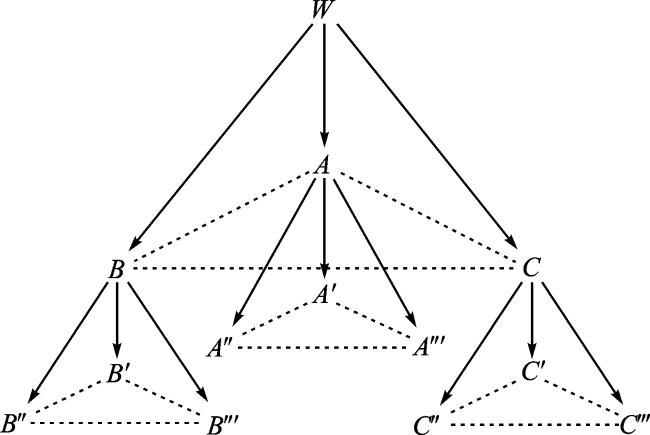
接下来, 通过两个示例说明3 × 3 方法的实用性。第一个例子是3 分×3分的结构, 如图1 所示。这个结构源于TAO模型的第一个任务:“将一个整体三分”。它在整体三分的基础上, 进一步对三元组的每个要素进行三划分。然后, 从九个不同的视角分析和处理问题。换言之,3分×3分的结构运用了两次3WD中的三分思想。针对不同的问题, 三分的方法不同,并且对三元组的解释也不同。第二个例子是Guffey和Loewy为商业写作提出的3 × 3 写作过程[32], 它将整个写作过程分为“预写-写作-修改”三元组。进一步将预写分为“分析-预期-适应”三元组; 将写作分为“研究-组织-撰写”三元组;将修改分为“修改-校对-评估”三元组。这九个元素的具体含义如下所示。
分析: 作者确定写作目的。预期: 介绍读者, 读者已经知道什么?读者的反应是中立、积极还是消极? 适应: 作者可以使用哪些技术来使作者的信息适应读者和读者的预期反应?研究: 收集数据以提供事实。组织: 将相似的事实分组在一起。撰写: 准备初稿, 通常写得很快,使用主动语态专注于简短、清晰的句子,链接想法以建立段落连贯性。修改: 确保其清晰,对话式,简洁且可读。校对: 花时间仔细阅读每条消息。评估: 决定此消息能否达到目的。
在3×3方法中, 三元组的结构和解释是基础, 三元组之间的作用和依赖关系更是关键。如何解释三元组的结构以及如何描述元素之间的关系需要结合实际应用而定。在1.3节将介绍以三层和三角形解释三元组结构的方法。此外, 分离和整合是3×3方法的两个关键特征。通过分离, 只需关注整体的特定方面, 使用不同的语言进行描述和表示, 并提供对整体的分析和理解。分离使得我们可以将注意力集中在特定的问题分析和处理上, 而不会受到其他问题的干扰或阻碍。通过整合, 同时考虑所有九个要素或问题, 从而得到对整体的全面理解与深入洞察。将整体分为九个侧面,降低了调查整体的复杂性,加深了我们对问题的理解深度, 同时也有助于揭示不同三元组之间的关系。3×3方法提供了一种解决问题的新视角。
1.3 3层×3角形方法和3角形×3层方法
3WD的基本概念之一是三件事的三元组。三元组有多种解释, 它提供了3WD的普遍性、灵活性和可操作性。下面介绍两种解释三元组的方法。
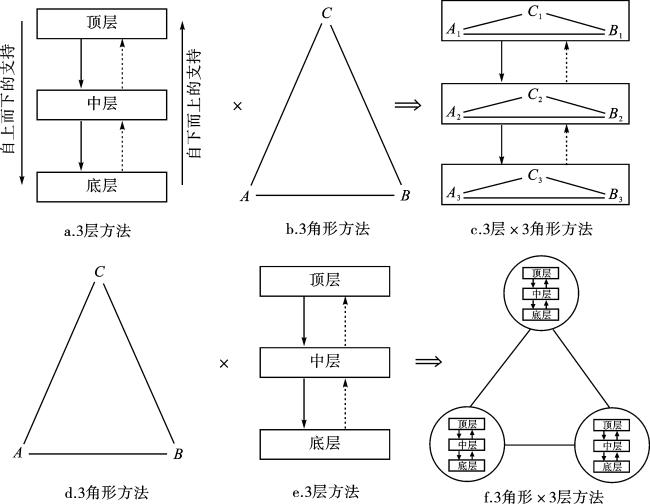
第二个方法是3 角形方法, 将三元组解释为三角形[5],如图2b所示。三角形的三个顶点表示三元组的三个元素, 而三个边表示三个元素之间的关系。三元组的每个元素都与其他两个元素相连。两个元素之间的关系可能有许多不同的解释, 例如依赖、转换、支持等。此外, 通过考虑不同的边数,可以看出元素之间关系的隐含信息。一是若只考虑一条边, 就会看到两个元素的关系。例如, 边(A,B)将A和B连接在一起。二是若同时考虑任何两条边, 就会看到共享元素与两个非共享元素的直接关系, 但不是两个非共享元素的直接关系。例如, 同时考虑边(A,B)和(A,C),则A成为焦点, 并且可以在B和C的上下文中进行解释, 但是B 和C的关系并不直接存在。三是若考虑所有三个边, 则三个角中的每一个角都恰好出现两次,出现两种类型的关系, 由边给出的直接关系和由两条边通过第三个元素给出的间接关系。例如,对于A和B,则有直接关系(A,B)和通过C 的间接关系,即(A,C)和(C,B)。除了上述两种对三元组的解释外, 还可以将三元组解释为三个元素组成的集合、三脚架、三段线和圆形等等[4-5]。
3层方法和3角形方法的结合,形成了3层×3角形方法,如图2c所示。在3层方法的基础上, 每层聚焦于三个相关问题(体现3角形方法)。通过在每一层引入三个基本问题, 不仅能够促进对每一层内容的理解和分析, 还能够在解决每一层问题时保持清晰的逻辑, 使得理解和分析变得更加容易。3层×3角形方法的三个基本任务是:1)将整体分为三个层次;2)探索三个层次的自然顺序;3)在三个层次上分析不同的问题(每层的问题由三个相关的问题组成)。
3层×3角形方法不但融合了3 层方法和3 角形方法的特点, 还融入了3×3方法的特征。分离和整合构成了3 层×3角形方法的两个关键特征。通过分离,只考虑特定层的三个相关问题, 并提供对整体的解释和理解。分离使得我们可以将注意力集中在特定层的问题分析和处理上, 而不会受到其他两个层的问题的干扰或阻碍。通过整合, 同时考虑三个层的九个问题, 从而得到对整体的全面理解与洞察。整合加深了我们对问题的理解深度, 同时也有助于揭示不同层之间的关系。在每层设置三个相关问题时, 通常可以以“What-Why-How”三元组为特征分析问题。“What”关于是什么; “Why”关于原因或动机; “How”关于过程或应用。另外, 根据实际应用的需求, 可以将这三个相关的问题换成三个相关的关键词或陈述句,从而以另一种形式表达出每层的含义。
3层×3角形方法易于理解和记住, 其在层与层之间关注不同类型的问题,并回答不同类型的问题, 而在每层中关注三个相关问题或关键词, 这充分反映了双三元思维的原则。换言之,3层×3角形方法是3×3方法的一个特例。除了3层×3角形方法以外, 还可以考虑3角形×3层方法, 如图2f所示。在3角形方法的基础上, 每个顶点以3层方法考虑问题。这种方法从另一种角度给出了分析、理解及解决问题的思路和方法。这两种方法的主要区别在于考虑问题时的视角不同,从而得到不同的结果。这是两种不同的方法与结构,根据实际应用的需求,可以选择合适的方法来解决问题。
2 双三元思维及3×3方法的应用
本节探讨双三元思维与3×3方法的应用。借助SMV空间的概念,为3×3方法的九个元素赋予具体的语义。我们构建了基于SMV空间的3×3解释并将其应用于XAI。最后, 将基于SMV空间的3×3解释用于解释智能推荐系统。
2.1 SMV空间
首先, 从三层方法的三个例子入手。第一个例子是传播学中Shannon和Weaver对通信问题构建的三层分类[33]。他们将通信问题分为技术问题、语义问题和有效性问题。这三层所解决的问题分别是: 如何确定通信符号的传输程度?如何准确地描述传输符号的意义?所接受的意义如何有效地影响接受者的行为? 为了方便起见, 将这三个问题表示成Symbols-Meaning-Effectiveness(SME) 三元组。第二个例子是信息科学和管理科学中的Data-Knowledge-Wisdom(DKW)层次结构[34-35]。数据(Data)表示为原始的未经处理的信号、数量等。知识(Knowledge)是指通过理解与分析数据,从数据中获取的知识。智慧(Wisdom)是指通过正确和明智地运用知识和经验而获得的正确判断和行动。第三个例子是心理学和认知科学中的Perception-Cognition-Action (PCA) 三元组[36]。PCA三元组和DKW层次结构之间存在相似性和语义联系, 即感知(Perception)产生数据,认知(Cognition)从数据中创造知识,而行动(Action)表明了明智地使用知识的智慧。
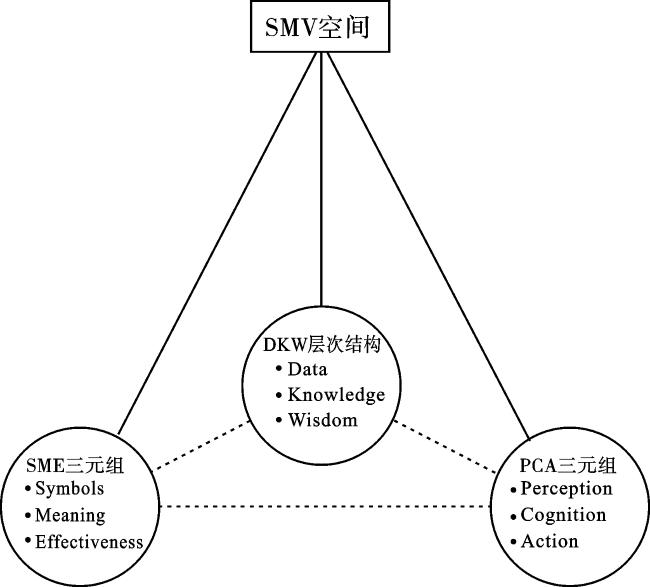
其次, 基于上述三个三层方法的例子,Yao引入了SMV空间作为三元思维的基本概念[7]。把文献[33]对通信问题的三层分类的前两层中选择了“Symbols (符号)”和“Meaning (意义)”, 并使用“Value (价值)”来描述第三层。这三个元素构成了一个SMV 三元组, 而SMV 空间是指添加了结构的SMV三元组。根据具体应用需求,可以为SMV三元组添加不同的结构,从而构建特定类型的SMV空间。例如,将三层方法应用于SMV三元组, 称为三层SMV空间。更具体地说, SMV空间是指一种三层方法的框架, 如图3所示。它将SME三元组、DKW层次结构和PCA 三元组融合在一起, 用于描述、理解和表示人类或机器的感知、认知和行动。从图3中可以看到, SMV空间是从三个不同的领域中抽象出来的。在DKW层次结构中, 数据是未解释的符号, 知识是关于数据的意义,而价值通常是通过明智地使用知识(即智慧) 来获得的。在PCA三元组中, 感知侧重于信号(即符号), 认知侧重于知识(即意义), 行动侧重于价值。因此, SMV空间适用于描述和理解信息科学、管理科学、认知科学和心理学中的三元模型。
最后, 将SMV 空间分别应用于数据科学[7]、XAI[11-12]和人机协同智能[37],说明了SMV空间的实用性、灵活性及简单性。在数据科学方面, 基于SMV空间构建了数据科学的概念框架。在符号层上,数据科学关注数据的形式, 将数据视为一种资源, 其目标是使数据可用; 在意义层上,数据科学关注数据的内容或嵌入数据中的知识, 将知识等同于权力, 并以使数据有意义为目标; 在价值层上,数据科学关注数据的价值, 将智慧视为价值, 目标是使数据有用。在XAI方面, 基于SMV空间提出了解释的3×3结构框架, 该框架可以看作是3层×3角形方法的一个特例。以Results-Meaning-Value (RMV) 构成解释的三元组, 然后在每层关注以What-Why-How三元组为特征的三个相关问题。在人机协同智能方面, 基于SMV空间提出了人机合作智能的概念框架。该框架将人、机器和人机组合系统(人机共生系统) 连接在一起形成了人机共生三角形。人和机器系统相互通信和交互, 人引导机器而机器支持人。尽管这两个系统相互依赖, 但它们独立工作,一个系统可能不知道另一个系统的内部工作机制。人类和机器除了他们自己的SMV空间外,共享一个共同的SMV空间。通过这三种不同领域中的应用,足以说明SMV空间的实用性。SMV空间适用于各种不同的背景, 并为其他许多领域提供了三层思维。
2.2 基于SMV空间的3×3解释
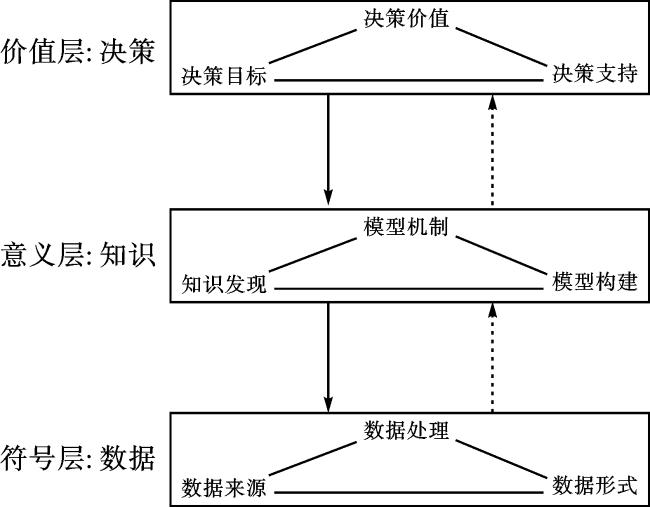


在符号层上, 解释数据来源、形式和处理。数据来源: 解释数据是否可靠、准确和全面。选择可靠的数据来源可以确保数据的准确性, 避免因数据错误或偏差而导致错误结果。数据来源影响着之后的分析、研究以及决策的过程, 所以对于数据来源的解释是不可忽视的。数据形式: 解释数据的类型、结构和特点。数据以多种类型和结构存在(例如类型有数值型、文本型和图像型等, 结构有一维数组、二维表格和多维数据等), 而每种数据类型都有自己的特点和属性。从这三个方面对数据形式进行解释有助于人们理解数据的意义和适用范围。数据处理: 解释数据的收集、清洗、转换、存储和分析。从原始数据中收集数据, 清洗数据中的问题(例如缺失值、异常值和重复值), 然后将数据转换为适合进一步分析的格式并选择合适的存储方式管理。分析数据提取有用的信息和知识, 使得数据变成一种资源。
在意义层上, 解释知识发现、模型构建和模型机制。知识发现: 解释从大量数据中获取有价值的知识的过程, 以便人们理解并信任所用的知识。知识发现的目的是向使用者屏蔽数据的繁琐细节, 从数据中提炼出有效的、新颖的、潜在有用的知识, 直接向使用者报告。模型构建: 解释构建模型的过程、类型和结构, 使人们能够理解模型的目的。构建模型是根据特定问题的需求和数据, 建立一个用于解决问题或预测结果的数学或统计模型。模型机制: 解释模型如何做出预测或决策, 以便决策者能够理解模型的工作原理。
在价值层上, 解释决策目标、支持和价值。决策目标: 解释决策时所追求的具体目标或预期。明确阐述决策目标有助于决策者能够理解与认可, 并有利于后期进行评估和比较。决策支持: 解释决策的有效性和可行性。决策支持是指提供全面及准确的信息帮助决策者在面临复杂的决策环境时做出更明智的选择。它旨在减少决策过程中的不确定性, 优化选项评估, 从而达到更好的决策结果。决策支持这一部分并不能代替决策者的最终判断和决策, 而是作为辅助工具来支持和增强决策过程。决策价值: 解释决策的价值所在,帮助决策者更好地理解潜在影响, 从而做出有利于自身目标和条件的决策。决策价值是指在决策过程中, 一个选项或方案所带来的实际或预期的效益、贡献或重要性。它代表了实现决策目标、解决问题、满足需求的程度和质量。决策价值的评估涉及定量分析(如数学模型、统计分析、成本效益分析等)和定性考虑(如战略配合、社会认知、环境影响等)。基于SMV空间的3×3解释在三个层之间存在自上而下的控制和自下而上的支持。以决策引导求知, 以知识引导数据, 有了数据再反过来, 以数据支持知识, 再以知识支持决策。有了决策层次的新认识,又开始了新的循环。基于SMV空间的3×3解释体现了数据、知识和决策之间的依赖和转化, 从数据到知识再到决策,提供了全面的解释方法,确保决策者做出对于整体目标最有利的选择。
智能系统的工作流程通常会涉及三个阶段, 即输入-过程-输出(Input-Process-Output, IPO)三元组。在IPO模型中, 过程被抽象地视为从输入(即给出的内容)到输出(即所需的结果)的转换。在基于SMV空间的3×3解释中, 数据-知识-决策(Data-Knowledge-Decision,DKD)三元组对应于IPO三元组。因此,可以从IPO三元组的视角对DKD三元组进行三层解释。数据对应于输入, 表示原始且未经处理的符号、信号、数量等。知识对应于过程,说明知识是连接数据和决策的中介,其功能是促进数据驱动决策。决策对应于输出, 表示通过使用知识和经验而做出判断和采取行动的结果。由上述讨论看出, 除了可以使用DKD三元组作为解释,也可以使用IPO三元组,同样可以探索其他三元组, 从多种不同视角构建3×3解释, 这有助于我们更进一步理解解释的内容。
综上, 基于SMV空间的3×3解释包含三个层次, 每一层以三角形方法关注三个相关问题, 且不同层回答不同问题。它能够促进对每一层内容的理解和分析,还能够在解决每一层问题时保持清晰的逻辑, 使得理解和分析变得更加容易。基于SMV空间的3×3解释是3层×3角形方法和SMV空间的产物。因此, 基于SMV空间的3×3解释属于3层×3角形方法, 不属于3角形×3层方法。这种解释方法和结构具有3WD的优越性,即易于表示、易于沟通、易于理解。
2.3 智能推荐系统的3×3解释结构
智能推荐系统是一种利用用户行为、偏好和物品信息, 为用户提供个性化推荐的技术和方法[40⇓-42]。推荐系统在信息超载问题上潜力巨大,被视为信息过滤的重要工具。消费者的需求通常是模糊的, 难以明确定义。若商家能够巧妙地向用户推荐满足其模糊需求的商品, 就有望将潜在需求转变为实际购买需求, 从而有效提升产品销售量。Resnick和Varian于1997年提出的非正式推荐系统概念[43],至今仍被广泛引用。该概念旨在借助电子商务平台, 向客户提供商品信息和建议, 模拟销售人员协助用户完成购买过程。当下, 主流的推荐算法涵盖以下几个方向:基于内容推荐、协同过滤推荐、基于知识推荐以及组合推荐[44⇓⇓-47]。每种方法都在不同程度上探索了推荐系统的核心思想, 以实现更精准、个性化的推荐效果。从可解释的视角看, 推荐系统需要有效地解释其工作原理和结果, 使用户能够理解并接受推荐系统。为此,将3×3解释用于解释智能推荐系统,旨在构建易于理解的解释。
在符号层上,讨论数据的来源、形式及处理。推荐系统依赖于大量的用户行为数据,包括点击、购买、评分、浏览历史等。通过可靠的数据来源,并将这些数据整理成一个统一的形式进行存储, 再进行有效清洗和处理,以便进行后续分析和建模。推荐系统的数据来源主要是推荐系统学术研究常用的数据集, 包括MovieLens、EachMovie、BookCrossing、JesterJoke、Netflix和UCI知识库等。将不同形式的用户行为数据和商品属性数据转化为矩阵形式, 并处理其中的缺失值、异常值和不合理值等。
在意义层上, 研究知识发现、模型构建和机制。推荐系统的核心和关键是推荐算法。通常, 在选择合适的模型和机制时, 需要综合考虑业务需求以及可用数据的情况, 并进行合适的评估和优化, 以实现更准确和有用的推荐。例如,协同过滤推荐方法需要基于用户行为数据发现用户之间的关联, 计算并找到与当前用户相似度高(比如兴趣和口味相似)的对象,计算这些对象对于当前用户的效用值,利用效用值对所有对象进行排序或者加权等操作, 找到最适合当前用户的对象,从而进行推荐。
在价值层上, 分析决策目标、支持和价值。推荐系统的决策目标是根据用户的兴趣、偏好和需求, 为他们提供个性化、有价值、有需求的推荐内容。推荐系统的决策支持可以帮助用户在面临海量的商品时能快速找到自己需要的商品。推荐系统的决策价值体现在三个方面:首先,它可以为用户提供个性化的、有用的信息,从而提高他们的体验和满意度;其次, 推荐系统有助于提高销售和业务增长,引导用户购买更多的产品或消费更多的内容;此外, 推荐系统还可以促进用户与平台的互动,增加用户留存率和忠诚度。
推荐系统的数据的来源、形式及处理影响着知识发现、模型构建和机制, 数据的选取、可靠的数据来源以及完善的数据处理流程影响着后续的分析和建模。这又进一步影响了决策的目标、支持和价值, 增强目标用户的体验和满意度, 提高商品的销售。反之,推荐系统通过不断收集用户的反馈信息,如点击、购买、喜好评分等, 又可以不断优化推荐模型,给出推荐结果, 再将这些新结果重新存储于数据库中。
3 总结与展望
本文借助3WD理论, 给出了双三元思维的概念。在双三元思维模式下, 构建了3×3方法与结构。从九个不同的层面或视角对问题进行分析、推理和判断。进一步, 将三级层次方法和三角形方法相结合, 给出了3层×3角形方法和3角形×3 层方法。这些方法为解决复杂和多元问题提供了更深入的分析、更全面的视角和更多的工具。我们还探讨了双三元思维与3×3方法在XAI中的应用。我们构建了基于SMV空间的3×3解释。在符号层上解释数据来源、数据形式和数据处理;在意义层上解释知识发现、模型构建和模型机制;在价值层上解释决策目标、决策支持和决策价值。基于SMV空间的3×3解释具有清晰的逻辑,可以为用户提供易于理解、易于表示和易于沟通的解释, 从而增强智能系统的透明性和可解释性。最后, 展示了基于SMV空间的3×3解释在智能推荐系统中的详细应用过程。
在XAI背景下, 现有的模型主要侧重于解释智能系统的工作流程和结果。关于解释的构建过程、解释的结构、解释的有效性以及解释的可理解性等诸多问题未得到应有的关注。在未来的研究中,将探索双三元思维与3×3方法在各类智能系统中的应用,提升人与智能系统之间的交互与合作效果。